Table of Contents
Every country wants to be a winner. And in the grand theater of international economics, nothing signals victory quite like a trade surplus. Politicians beam when announcing that their nation sold more to the world than it bought. Newspapers trumpet the numbers. Economists nod approvingly. The message is clear: we won at trade.
But what if winning at trade looks suspiciously like losing at something else?
The strange thing about trade surpluses is that almost everyone misunderstands what they actually mean. We treat them like a national report card, as if countries were students competing for gold stars. But when you strip away the rhetoric and look at what’s really happening, trade surpluses reveal something far more interesting and considerably less triumphant than the standard story suggests.
The Backwards Logic of Keeping Score
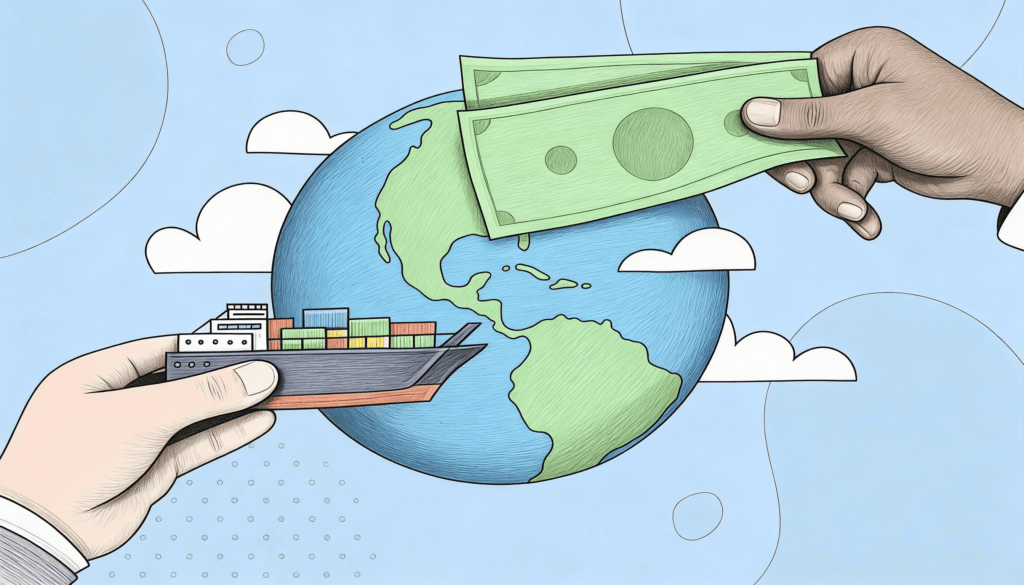
Think about what a trade surplus actually is. Your country produces televisions, cars, and semiconductors. Those products cross the border and land in foreign living rooms, driveways, and factories. In return, your country receives… money. Pieces of paper. Digital entries in bank accounts. Promises to pay.
Now consider this from a different angle. You just sent away real things that required real labor, real resources, and real time to create. What did you get for all that effort? The ability to buy real things from abroad at some future date. Maybe.
If a person behaved this way, we would call them financially savvy but experientially poor. Imagine a neighbor who works tirelessly, produces beautiful furniture, sells it all to others, and then sits in an empty house counting dollar bills. They’re getting richer on paper, sure. But they’re sitting on the floor.
This is the first cost that no one wants to admit: a trade surplus means your country is consuming less than it produces. Your workers are making things for someone else to enjoy. The fruits of domestic labor are being exported while domestic living standards could be higher if people kept more of what they made or imported more of what others make.
The Factory That Ate a Generation
Consider the human element hiding in those statistics. A trade surplus usually requires certain conditions: workers who produce more than they consume, wages that stay low enough to keep exports competitive, and often a culture or policy environment that encourages saving over spending.
This sounds responsible. Thrifty. Virtuous even.
But look closer at what this means for actual people. In countries that have run persistent trade surpluses, you often find workers who spend their prime years making products they cannot afford to buy themselves. The factory worker assembles smartphones but uses a basic model from three years ago. The automaker builds luxury cars but drives something modest. The software engineer creates premium applications but subscribes to free tiers.
This isn’t an accident. It’s a feature of the system that produces the surplus.
When economists discuss trade surpluses, they use sanitized language about comparative advantage and optimal resource allocation. What they’re often describing, without quite saying it, is a system where workers are optimized for production rather than consumption. Where the economy is tuned to serve foreign consumers rather than domestic ones.
The cost here is measured in deferred gratification on a national scale. An entire population working today for promises of prosperity tomorrow. And then tomorrow arrives, and the surplus must continue, so the deferral extends further into the future. It becomes a treadmill that’s difficult to step off without causing disruption.
The Currency Dance No One Wants to Do
Here’s where it gets interesting. To run a persistent trade surplus, a country often needs to keep its currency from appreciating. Because if your currency gets too strong, your exports become expensive and your surplus evaporates.
So countries with large surpluses frequently engage in currency intervention. They sell their own currency and buy foreign currency. They accumulate massive reserves of dollars, euros, or whatever currency their trading partners use.
Now think about what this means. You’re deliberately weakening your own money to keep your exports cheap. You’re making your own citizens’ purchasing power lower than it could be. Every tourist from your country who travels abroad gets less for their money. Every imported good costs more than it should.
And what do you get for this sacrifice? A growing pile of foreign currency reserves that you invest in… foreign government bonds. You’re lending money back to the very countries that bought your exports. Often at relatively low interest rates.
Let’s pause on the irony here. Your workers produce real goods. Those goods go abroad. You receive currency. You then take that currency and lend it back to the foreign buyers so they can continue buying your goods. You’ve essentially financed your own customers’ purchases.
At some point, you have to ask: who is actually benefiting from this arrangement?
The Political Theater of Surplus Celebration
This brings us to the question of why no one wants to admit these costs. The answer lies partly in how we’ve constructed the narrative around trade.
Trade surpluses are politically popular because they’re easy to sell. “We’re winning at trade” is a simple message. It suggests national strength, competitive superiority, and economic prowess. It’s a story about defeating other countries in the marketplace.
Trade deficits, conversely, get framed as weakness. They suggest a country that’s losing, that can’t compete, that’s being taken advantage of.
But this framing is backwards. A trade deficit means you’re receiving more real goods and services than you’re sending away. You’re consuming more than you’re producing. From the perspective of actual living standards right now, that’s not obviously a bad thing. It means foreign workers are making things for your citizens to enjoy.
The reason politicians prefer surpluses to deficits isn’t because surpluses are better for citizens. It’s because surpluses are better for the story politicians want to tell. They can point to factories humming with activity, to export numbers climbing, to foreign markets conquered. These are visible, measurable wins.
What they cannot easily show is the alternative: citizens who could have higher living standards, workers who could consume more of what they produce, or an economy balanced toward domestic welfare rather than export performance.
Admitting the costs of a trade surplus would require politicians to say something deeply uncomfortable: “We’ve optimized the economy for production rather than consumption. We’ve chosen to defer gratification indefinitely. We’ve made our workers serve foreign consumers instead of themselves.”
That’s not a message that wins elections.
The Savings Glut Nobody Wanted
There’s another cost that operates at a more abstract level but has concrete consequences. When a country runs a persistent trade surplus, it accumulates financial claims on the rest of the world. It builds up savings that need to find a home.
This sounds like a good problem to have. After all, savings are virtuous, right?
But consider what happens when massive amounts of savings go searching for returns. That money flows into foreign assets, often into real estate, stocks, and bonds in deficit countries. This can inflate asset prices in those countries, creating bubbles. It can lower interest rates to artificially low levels. It can distort investment decisions and resource allocation.
The surplus country has essentially exported its savings, and in doing so, it may have helped create financial instability elsewhere. The very act of running a surplus contributes to imbalances that can eventually snap back in painful ways.
The Locked Box of Accumulated Claims
Let’s return to those foreign currency reserves that surplus countries accumulate. Trillions of dollars sitting in central bank vaults and accounts, invested mostly in foreign government bonds.
These reserves represent claims on future goods and services. They’re the deferred consumption we discussed earlier. The idea is that someday, the country can use these reserves to import things it needs or wants.
But here’s the uncomfortable question: when is someday?
For countries that have run surpluses for decades, the reserves just keep growing. They become almost impossible to spend down without causing major disruptions. If a country suddenly started running large deficits to consume its accumulated savings, it would have to let its currency appreciate significantly, which would devastate its export industries and cause unemployment.
So the reserves sit there, growing larger, representing prosperity that cannot quite be accessed without breaking the system that created it.
It’s like a person who spends their entire career saving for retirement, accumulating a massive nest egg, but then finds they cannot actually retire because they’ve built their identity and social connections entirely around working. The savings are real, but using them would require becoming a different person.
Countries with large surpluses have built economies that depend on those surpluses continuing. The factories, the jobs, the investments, the political coalitions—all of it is structured around export-oriented production. To actually consume the wealth they’ve accumulated would require transforming the entire economic model. So they don’t. They keep producing, keep exporting, keep accumulating claims they may never fully use.
The Trust Fund Country Problem
There’s a strange parallel between countries with trade surpluses and trust fund beneficiaries. Both have accumulated wealth, often through the efforts of a previous generation or through structural advantages. Both face the question of what to do with that wealth.
Trust fund kids sometimes struggle with purpose. They have resources but no urgent need to develop skills or take risks. They can live comfortably without contributing much of value.
Countries with large surpluses, particularly those dependent on natural resource exports, can face similar challenges. The surplus can become a crutch that discourages economic diversification, innovation, and adaptation. Why develop new industries when the current model generates a steady surplus?
This might seem like a luxury problem, but it’s a real cost. It means missed opportunities, underdeveloped sectors, and brittleness when conditions change. An economy overly dependent on maintaining a surplus is an economy that has optimized for one thing at the expense of resilience.
The Demographic Trap
For aging societies, trade surpluses have a particular irony. The standard logic is that countries should run surpluses while their populations are working age, building up savings to support retirees later.
But what this often means in practice is that the current generation of workers produces far more than they consume, exporting the difference, while their own needs and wants are subordinated to the goal of the surplus. They work harder, save more, and consume less than they otherwise would.
Then, when they reach retirement, the country needs to start running deficits to support them. But by this point, the entire economy has been structured around surpluses for so long that reversing course is nearly impossible without major disruption.
So retired workers, who spent their careers producing for others, may find themselves with insufficient domestic production to support their retirement needs. The claims they accumulated might be harder to redeem than anticipated. The deferred gratification gets deferred once more.
The Way Forward Is Backwards
Understanding the real costs of trade surpluses doesn’t mean surpluses are always bad. Context matters. A country recovering from disaster might sensibly run surpluses to rebuild reserves. A nation preparing for demographic transition might accumulate claims on future production. Strategic considerations can justify tolerating lower consumption today for security tomorrow.
But persistent, structural surpluses maintained through policy interventions for their own sake are different. They represent a choice to optimize the economy for external metrics rather than internal welfare. And that choice has costs.
The first step toward acknowledging these costs is recognizing that trade isn’t a competition with winners and losers. It’s a mechanism for mutual benefit. Both surpluses and deficits have tradeoffs. Both can be sustainable or unsustainable depending on context.
The second step is shifting how we measure success. Instead of asking whether a country runs a surplus or deficit, we should ask whether its citizens can access the goods and services they need and want. Whether workers produce for their own benefit or primarily for others. Whether the economy serves the people or the people serve the export statistics.
These are harder questions to answer. They don’t fit on a dashboard or in a headline. But they’re the right questions. Because in the end, an economy that “wins” at trade by making its own citizens work harder for less consumption isn’t winning at all.
It’s just very good at keeping score in a game that doesn’t matter while losing at the game that does.