Table of Contents
Imagine you could travel back to medieval Europe with one piece of investment advice. You’d probably want to tell someone to invest in the next big innovation, right? Back up the guy inventing the printing press or bet on better shipbuilding techniques. But the smartest move would have been simpler and duller. Buy land near the only bridge crossing the river. Control the road where merchants must travel. Own the mill where farmers must grind their grain.
The feudal lords understood something that most modern investors forget. It doesn’t matter who makes the best wagon if you own the only road the wagon can travel on. It doesn’t matter who bakes the finest bread if you own the stream that powers the only mill in the valley.
This is the secret hiding in plain sight within infrastructure investing. We’ve been taught to admire the people building better mousetraps, but sometimes the real wealth lies in owning the floor where all mousetraps must be tested.
The Tyranny of Necessity
There’s a special kind of power in owning things people cannot avoid. Not things they prefer. Not things they love. Things they need to function in modern life.
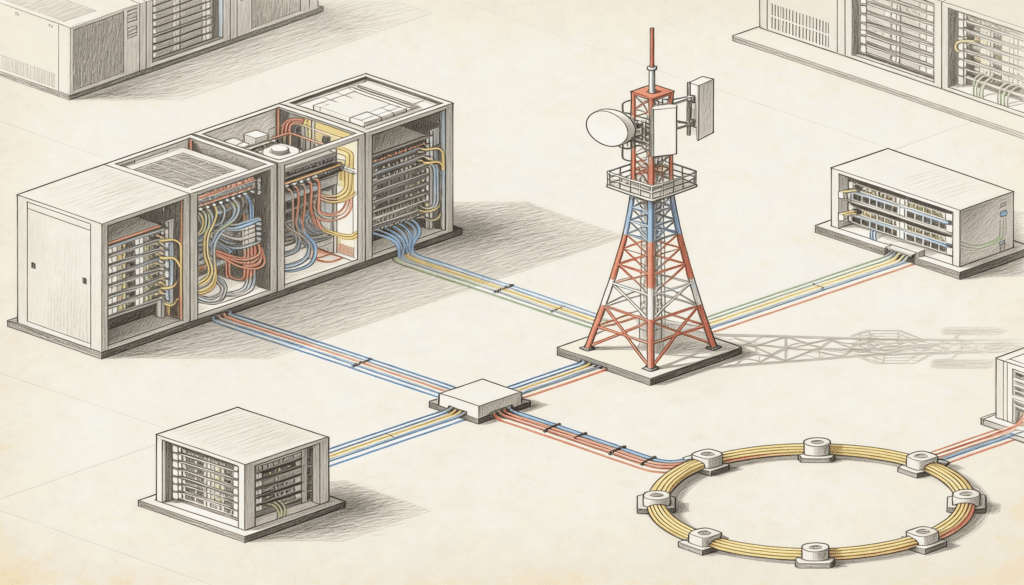
Consider the difference between owning a factory that makes smartphones and owning the cell towers that make those smartphones work. Apple must constantly innovate, dazzle, and convince you that this year’s model is worth the upgrade. The cell tower company just has to exist. You can switch from an iPhone to an Android, but you cannot opt out of needing the towers. They sit there, humming quietly, collecting fees regardless of which device you choose.
This is the infrastructure advantage. It operates below the level of choice. You might debate which car to buy, but you don’t debate whether to use roads. You might compare airlines, but you cannot fly without airports. The factory owner lives in the anxious realm of preference and competition. The infrastructure owner lives in the calm realm of necessity.
The factory owner asks, “How do I make you want this?” The infrastructure owner barely needs to ask anything at all.
The Moat That Builds Itself
Warren Buffett loves talking about economic moats, those competitive advantages that protect a business from rivals. He looks for wide moats. But most moats require constant maintenance. You must keep innovating, keep marketing, keep your brand fresh in people’s minds. Coca-Cola has a strong brand, but the company still spends billions reminding you to drink it.
Infrastructure moats are different. They’re built from physics, geography, and the basic math of duplication.
Try building a second set of water pipes to every house in a city because you think you can do it better than the current provider. Try laying down a parallel set of railway tracks next to existing ones. The capital cost makes it absurd. The physical space often makes it impossible. This isn’t a moat you have to defend. It’s a moat that defends itself.
Even in cases where competition is theoretically possible, the economics make it irrational. We could have five different companies running five sets of electrical wires to your home. But why would society bear that redundancy? The first mover’s advantage in infrastructure isn’t just an advantage. It’s often a permanent condition.
The Beauty of Boring
There’s something almost insulting about infrastructure investing. It’s profitable precisely because it’s forgettable. Nobody wakes up excited about sewage systems or excited about the electrical grid. Nobody writes news articles about a bridge having another successful day of letting cars cross it.
This invisibility is a feature, not a bug. The companies that grab headlines are usually fighting for attention because they exist in competitive markets. Tesla makes news. The company that owns the highway where Teslas drive does not. But examine the returns over time, and you’ll find something curious. Boring often beats exciting when you stretch the timeline long enough.
The paradox is that we’re drawn to stories, narratives, and drama. We want to invest in the future, in disruption, in transformation. But the bridge doesn’t care about your narratives. It just collects its tolls, year after year, in good times and bad. There’s a kind of financial enlightenment in accepting that the most reliable profits often come from the least exciting assets.
Think about it from a different angle. If you owned a restaurant, you’d worry about food trends, competitors, reviews, and the health inspector. If you owned the building where restaurants come and go, you’d just collect rent. The restaurant owner is in the business of being interesting. The landlord is in the business of being necessary. One is exhausting. The other is renewable.
The Time Machine Quality
Here’s where infrastructure reveals something profound about the nature of wealth. These assets don’t just generate returns. They generate returns that stretch across generations.
A factory from 1950 is probably obsolete. The products it made are relics. The processes it used are outdated. The entire industry might not exist anymore. But a bridge built in 1950? Still a bridge. Still charging tolls. Still serving its original function. Infrastructure has this strange immunity to the passage of time that normal businesses don’t possess.
This creates a compounding effect that’s hard to appreciate until you map it out. When you own productive assets that don’t decay with technological change, the math gets weird in a good way. It’s like planting an oak tree that doesn’t just grow but becomes more valuable as the forest around it changes.
Your great-grandfather could have invested in the hottest tech company of his era, and that wealth would have likely vanished through disruption. Or he could have invested in water utilities, and you’d still be collecting dividends today. Infrastructure investing is a bet that human needs are more stable than human wants. So far, that’s been a winning bet for centuries.
The Hidden Leverage
The fascinating thing about infrastructure is how it multiplies other people’s ambitions. When someone builds a factory, they need roads to ship their goods. When someone starts a data center, they need massive amounts of electricity. When cities grow, they need airports, sewage systems, and telecommunications networks.
Every ambitious plan in the economy has infrastructure embedded in it. This means infrastructure owners have a kind of passive leverage on economic growth. They don’t need to pick winners. They don’t need to predict which industries will boom. They just need to own the pipes, wires, and roads that all growth must flow through.
It’s like owning a percentage of everyone else’s success without bearing the risk of their failure. The factory might go bankrupt, but it paid for infrastructure use on its way down. The startup might flame out, but it paid its electric bills first. Infrastructure sits at the bottom of the capital structure in a physical sense. In a financial sense, it’s often first in line.
The Regulatory Dance
Of course, nothing is perfect. Infrastructure’s greatest strength creates its largest vulnerability. When you own things people must use, regulators get interested. They worry about monopoly power, price gouging, and public welfare. This is the tradeoff for having such a strong position.
But here’s an angle most people miss. Regulatory oversight, while annoying to infrastructure owners, actually strengthens the moat. It raises the bar for new entrants even higher. It creates stability of returns even if it caps those returns. A regulated utility might not make extraordinary profits in any given year, but it’s almost guaranteed to make steady profits year after year.
The factory owner faces market risk. The infrastructure owner faces regulatory risk. But regulatory risk is negotiable, predictable, and often moves slowly. Market risk can kill you overnight. When framed this way, the regulatory burden starts to look less like a problem and more like the price of admission to an exclusive club.
The Philosophy of Foundations
Step back further and infrastructure investing reveals something about how civilizations actually work. We like to celebrate innovation and entrepreneurship. We build monuments to inventors and industrialists. But civilization isn’t possible without the boring stuff underneath. Without clean water, reliable power, and working roads, all the innovation in the world goes nowhere.
Infrastructure is literally the foundation. And foundations have a strange property. They’re invisible when they work and catastrophic when they fail. This creates an interesting investment psychology. People don’t appreciate infrastructure until it’s gone, which means it’s chronically undervalued by attention even as it’s essential by function.
Infrastructure investing feels unambitious. It lacks the thrill of backing the next big thing. It doesn’t make for exciting dinner party conversation. Nobody writes breathless profiles about infrastructure investors. They’re too busy writing about tech founders and innovative disruptors.
But examine the wealth that lasts, the fortunes that survive generations, the assets that compound across decades. You’ll find a lot of bridges, utilities, and toll roads. You’ll find a lot of boring, essential, impossible-to-replace infrastructure. The medieval lords knew this secret. They didn’t own the fanciest wagons. They owned the roads.
In a world obsessed with disruption, there’s a quiet power in owning what cannot be disrupted. In an economy racing toward the future, there’s wealth in controlling what the future must be built upon. The factory owner chases innovation. The infrastructure owner sits still and watches everyone else pay for passage.
That’s not feudalism. But it’s not that different either.