Table of Contents
The trouble with watches as investments is that they were never meant to be investments at all, let alone 3-Watch Portfolio. They were meant to tell time. That we’ve turned them into speculative assets says more about us than it does about them. But here we are, and if you’re going to play this game, you might as well play it intelligently.
The concept of a three watch collection isn’t new. Watch enthusiasts have been preaching this gospel for decades. What’s worth examining is why three, specifically, creates the conditions for both financial stability and potential appreciation. It’s not about the number itself. It’s about what the constraint forces you to do.
The Tyranny of Choice and the Freedom of Limits
When you tell yourself you can only own three watches, you’re doing something radical. You’re refusing to be a collector in the traditional sense. Collectors accumulate. They chase completeness. They fill boxes and safes with pieces they’ll never wear because the hunt matters more than the having.
A three watch limit turns you into something else entirely. You become an editor. Every piece must justify its existence not just on its own merits, but against every other watch you could own instead. This creates a natural filter that protects you from the two great wealth destroyers in the watch world: impulse purchases and trend chasing.
The financial markets have known this for centuries. Concentration builds wealth. Diversification preserves it. Three watches give you just enough diversification to weather different market conditions while maintaining enough concentration that each piece matters. You can’t hide bad decisions in a portfolio of three.
The Architecture of a Balanced Portfolio
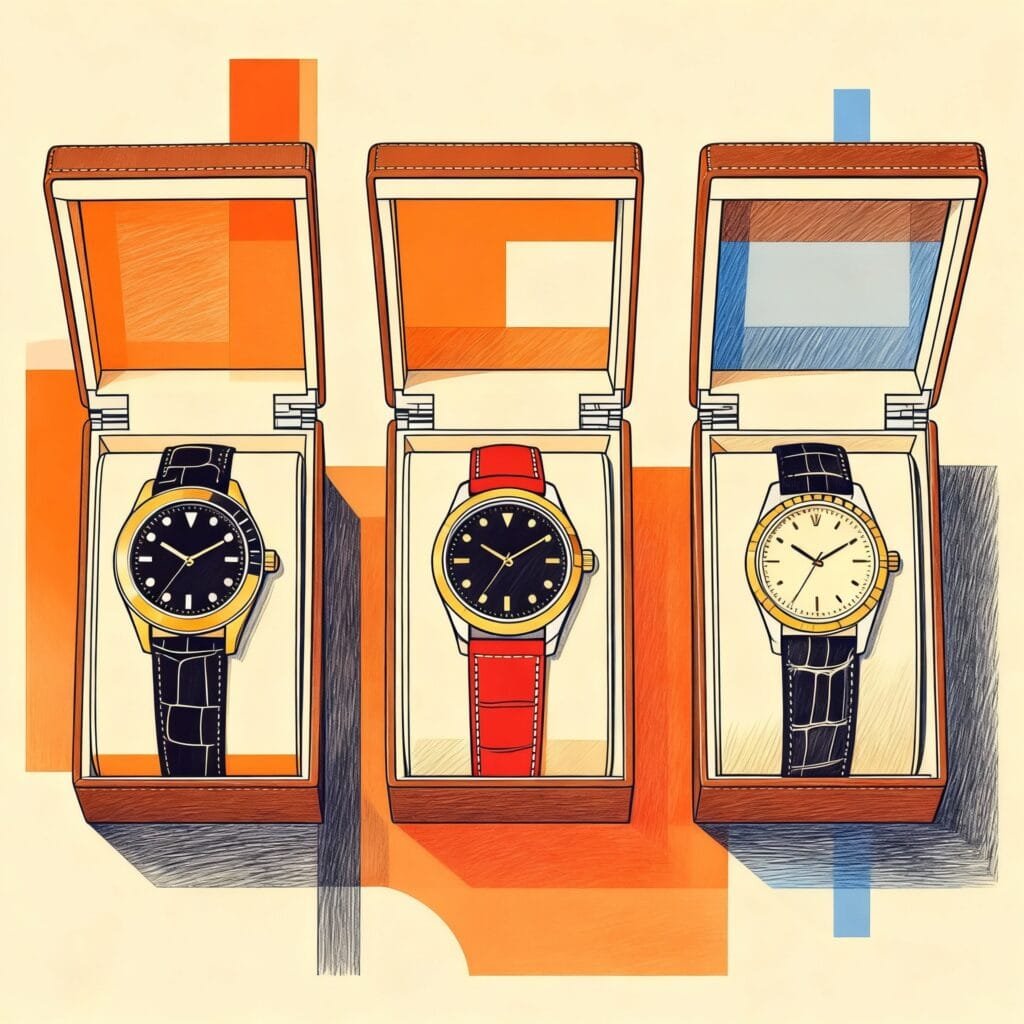
Think of your three watches as occupying different positions on a risk spectrum. Not just financial risk, but emotional risk, social risk, and the risk of irrelevance. Each watch needs to serve a purpose that the others cannot.
The first watch is your foundation. It’s the piece that you could wear every day for the rest of your life and never feel like you made the wrong choice. This isn’t about playing it safe in the boring sense. It’s about understanding that some things endure because they’ve solved fundamental problems so completely that fashion cannot touch them.
The second watch is your reach. It’s the piece that represents where you want to be, or what you believe will become important. This is where calculated risk enters the portfolio. You’re making a bet on quality, on a brand’s trajectory, or on a style coming into its own.
The third watch is your wild card. It’s the piece that makes no sense to anyone but you. It might be vintage. It might be from a brand nobody’s heard of. It might be deeply unfashionable. This is your insurance against becoming predictable, which in markets as in life, is often the most expensive thing you can be.
The Foundation: Why Boring Wins
Your foundation piece should bore the internet. If watch forums get excited about it, you’ve probably chosen wrong. Excitement is expensive. Excitement is volatile. Excitement is often the sound of air rushing into a bubble.
What you want is something so established, so proven, so thoroughly integrated into the cultural fabric that its value becomes a kind of background radiation. These pieces don’t spike dramatically. They don’t collapse dramatically. They compound slowly, year after year, because they represent something that markets eventually recognize as rare: permanence.
The paradox here is profound. The watch that seems like the safest financial choice often the one that requires the most courage to buy. When every voice online is screaming about the next hot brand or limited release, choosing the obvious feels almost foolish. You’ll wonder if you’re missing out. You are. You’re missing out on volatility disguised as opportunity.
Consider what makes something truly foundational. It’s not just quality of manufacture, though that matters. It’s not just brand prestige, though that helps. It’s the intersection of utility and beauty so perfectly balanced that the object transcends its category. A foundation watch is one that could have been made fifty years ago or fifty years from now and still make perfect sense.
This piece protects your portfolio the way Treasury bonds protect an equity portfolio. Not because it’s going to make you rich, but because it’s not going to make you poor. When trends reverse and yesterday’s darlings become today’s cautionary tales, your foundation piece will still be worth approximately what you paid for it, probably more, and definitely more than your neighbor’s collection of hype watches now gathering dust.
The Aspirational Piece: Betting on Excellence
Your second watch is where you get interesting. This is the piece where you make a genuine prediction about the future. Not a guess, not a hope, but a reasoned argument about what excellence looks like and where the market has mispriced it.
The key insight is that true value often hides in plain sight. Markets are efficient at pricing hype. They’re terrible at pricing mastery. When a brand spends twenty years perfecting a movement, when a independent watchmaker works with a two year waiting list not because of artificial scarcity but because one person can only make so many watches, the market takes a long time to catch up.
Your aspirational piece should be something that makes you slightly uncomfortable when you buy it. Not because you can’t afford it, but because you’re not entirely sure you’re right. This discomfort is useful. It means you’re actually taking a position rather than following consensus.
Look for brands or pieces that have done something genuinely difficult. Not difficult in the sense of adding complications for the sake of complications. Difficult in the sense of solving real problems or achieving aesthetic breakthroughs that required years of experimentation. Markets eventually reward real achievement, but there’s often a lag. That lag is your opportunity.
The aspirational watch is also your bridge piece. It connects your foundation to your wild card. It has enough establishment credibility that you’re not being reckless, but enough unconventional appeal that you’re not being boring. This is where personal taste becomes an investment edge. If you genuinely love something that the market hasn’t fully recognized yet, you get to enjoy wearing it while you wait for everyone else to catch up.
The Wild Card: Being Productively Wrong
Your third watch should be the one that could make your entire portfolio look brilliant or make you look like an idiot. This is the piece where conventional wisdom ends and personal conviction begins.
The beautiful thing about a wild card is that it forces you to develop taste independent of market validation. You can’t buy this watch because everyone agrees it’s good. You have to buy it because you see something others don’t. Maybe it’s a vintage piece from an era everyone else ignores. Maybe it’s a microbrand working in materials or styles that the establishment dismisses. Maybe it’s a complication that’s currently unfashionable.
This is where you learn the difference between contrarian and simply wrong. Contrarian means you have a reason for disagreeing with consensus. Wrong means you’re disagreeing because disagreeing feels clever. The best wild cards come from deep knowledge of some niche or category. You’ve done the research everyone else was too lazy to do. You’ve made connections others missed.
But the real return from a wild card isn’t financial. It’s intellectual. This piece teaches you to think for yourself. Every time you look at it, you’re reminded that markets are just collective opinions, and opinions can be wrong for years before they correct. This piece is your tuition in a course called “How to Trust Your Own Judgment.”
The Portfolio Effect: Why Three Is Not Just Three
Here’s where it gets interesting. Your three watches don’t exist in isolation. They interact. They create a system that’s more robust than any single piece could be.
When one category is hot, another is usually cold. When vintage is soaring, modern might be soft. When steel sports watches are impossible to find at retail, precious metal dress watches are often available. Your portfolio balances these cycles without requiring you to time markets or constantly trade in and out of positions.
But the more subtle benefit is psychological. Three watches is few enough that you actually wear all of them. When you wear them, you develop a relationship with them. You learn their quirks. You notice when the running is slightly fast or when the strap needs adjustment. This relationship matters because it keeps you from selling at the wrong time.
Markets reward patience, but patience requires attachment. When a watch is just a financial asset sitting in a safe, you’ll sell it the moment the price looks good. When it’s something you wear and love, you’ll hold through temporary dips and capture the long term appreciation. The best investments are often the ones you forget you made. Three watches ensure you never forget, but in a good way.
The Intangible Dividends
Let’s talk about returns nobody mentions. A good watch collection pays dividends that don’t show up on price charts.
Every time you glance at your wrist and feel satisfied with what you see, that’s a return. Every time someone notices your watch and you have an interesting conversation, that’s a return. Every time you put on a particular watch and it makes you feel slightly more capable of handling whatever the day brings, that’s a return.
These might sound soft, but they compound. The confidence that comes from wearing something you know is excellent affects how you carry yourself. How you carry yourself affects how others perceive you. How others perceive you affects opportunities that come your way. It’s not magic. It’s the subtle mathematics of accumulating small advantages.
The alternative is instructive. People with large collections often feel anxious about what to wear. Decision fatigue is real, and it has a cost. Three watches eliminate this. You pick based on context and mood, not by scrolling through a case of thirty options wondering if you’re making the optimal choice.
There’s also the dividend of clarity. When you limit yourself to three pieces, you become very clear about what matters to you. Some people discover they value history. Others realize they care most about innovation. Still others learn that what they really want is simplicity executed perfectly. This self knowledge is valuable far beyond watches.
The ultimate irony of building a smart watch portfolio is that if you do it right, you’ll never sell. The pieces become part of how you think about yourself. They mark time not on their dials but in your life. You remember what you were doing when you bought each one. You remember what you were wearing during important moments.
This is perhaps the highest return of all. You’ve converted money, which disappears, into objects that persist and accrue meaning. Financial assets come and go. The right three watches can outlive you and carry your story forward.
But if you do sell, if circumstances change or tastes evolve, you’ll find that thoughtfully assembled collections command respect. Buyers recognize seriousness. They pay for it. Your three watches will likely sell for more together than separately because they demonstrate something rare: restraint combined with conviction.
The Real Risk
The greatest risk in any collection isn’t losing money. It’s building something that doesn’t matter. It’s accumulating pieces that impress strangers but bore you. It’s mistaking other people’s enthusiasm for your own judgment.
Three watches, chosen honestly, eliminate this risk. You can’t hide behind quantity. Each piece has to earn its place. This forces authenticity, and authenticity is the ultimate form of risk management. When you own things for the right reasons, market fluctuations become noise. You’re insulated by meaning.
The portfolio you build says something about how you think. Make it say something true. Make it three things instead of thirty. Make each one matter enough that you’d be disappointed to sell it. That’s good living.
The returns will follow, in time, because value always does. But by then, you might not care about the money anymore. You’ll care about the watches. And that, more than any price appreciation, is the entire point.