Table of Contents
Why Survivorship Bias Is Quietly Sabotaging Your Investing
You have read every Warren Buffett biography on the shelf, yet you are still no closer to financial safety. That is not a failure of effort. It is a failure of the stories you have been told. The entire financial education industry suffers from survivorship bias investing, the habit of studying only the people who won while ignoring the far larger crowd who lost everything doing almost exactly the same things.
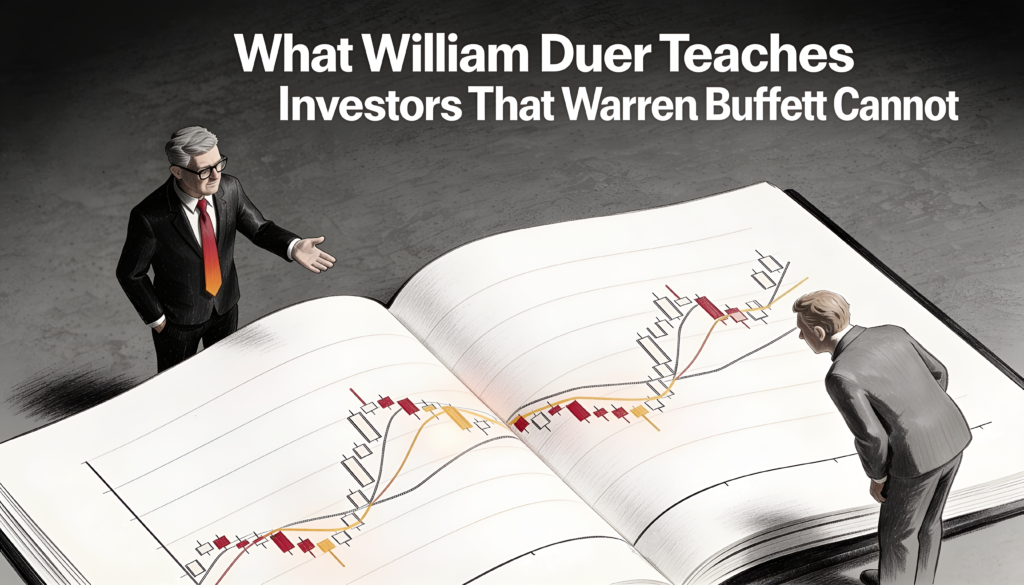
Survivorship bias is the logical error of focusing on the survivors of a process and forgetting the casualties who never made it into the data set. In investing, it means we worship the billionaires and erase the bankruptcies. This article argues that the most valuable financial education you can get is not Buffett versus the market. It is Buffett versus failure. And to understand failure properly, you need a teacher who embodies it.
His name was William Duer, and almost nobody remembers him. That is precisely the problem.
Buffett Versus Failure: The Education Nobody Sells You
Warren Buffett is the most studied investor in history. MBA students recite his shareholder letters like scripture. Entire careers are built on reverse engineering his moves. And yet, for all of that study, most investors still lose money, still panic at the bottom, and still chase the top.
The reason is simple. Buffett is an outlier so extreme that modeling your behavior on him is a bit like learning to swim by studying Michael Phelps. You may pick up a few useful techniques, but you are not going to become Phelps, and pretending otherwise might convince you to jump into water that is far too deep.
Buffett’s principles are genuinely sound. Buy quality companies. Think in decades. Be greedy when others are fearful. But notice what those principles assume. They assume you possess rationality, patience, and the emotional discipline to sit perfectly still while the world burns around you. They assume you are the kind of person who never panics, never over leverages, and never confuses momentum for genius.
Most people are not that person. Most people, when the pressure rises, behave far more like William Duer than like Warren Buffett. And that is exactly why studying the man who almost broke the American economy in 1792 may protect your money better than another Buffett quote ever will.
Study Buffett for inspiration. Study failure for survival. One of them will make you feel good about investing. The other might actually keep you from losing everything.
The William Duer Case Study in Financial Self Destruction
William Duer was not a fringe gambler scribbling tips in a tavern. He was the ultimate insider. A member of the Continental Congress, a friend of Alexander Hamilton, and the first Assistant Secretary of the Treasury. He sat at the center of the new nation’s financial nervous system, and he used every advantage that position gave him.
When Hamilton restructured the country’s revolutionary war debt, Duer recognized opportunity everywhere. He bought government securities aggressively, almost always with borrowed money, and frequently using information he had obtained inside the Treasury. He speculated on bank shares, formed secret partnerships, and borrowed from wealthy merchants and ordinary working people alike, promising everyone extraordinary returns.
For a while it worked beautifully. Then, in early 1792, credit tightened. His lenders wanted their money back. Duer could not pay because he had already used their money to finance newer positions, so he borrowed even more to cover the older debts. By March the entire structure collapsed. Securities prices crashed, panic spread through New York’s merchant class, and people who had never even heard of Duer found themselves holding worthless promises. He was thrown into debtors prison, where he died in 1799, still owing money to people who would never see a single cent.
The Anatomy of a Bet Built on Momentum
What makes Duer so instructive is the structure of his thinking. His entire empire rested on one fragile assumption, that prices would keep rising forever. Every loan, every partnership, every promise was built on the belief that tomorrow’s price would be higher than today’s.
He was not investing in value. He was investing in momentum. And momentum, as any physicist will tell you, is not a force. It is a condition that vanishes the instant the force behind it stops. When the force stopped, so did Duer.
The Repeating Pattern Survivorship Bias Hides From You
Here is the lesson that survivorship bias investing actively prevents you from learning. Duer did not invent a new mistake. He authored a template, and that template has crashed the financial system again and again ever since.
Look at the basic structure. Someone with access or credibility, or both, begins taking outsized risks. They amplify those bets with borrowed money. They attract followers who trust their position rather than their logic. Early returns validate the strategy, which attracts more money, which pushes prices higher, which appears to validate the strategy further. It is a self reinforcing loop that looks like brilliance right up until the moment it becomes rubble.
That exact pattern appears in:
- The South Sea Bubble of 1720
- The railroad manias of the nineteenth century
- The crash of 1929
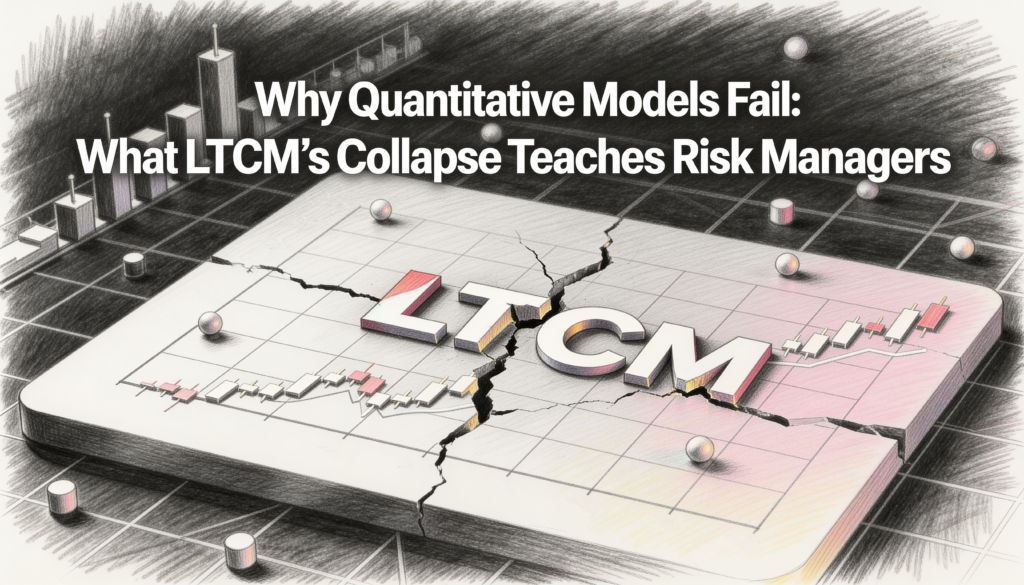
- The collapse of Long Term Capital Management in 1998
- The mortgage crisis of 2008
- The cryptocurrency collapses of 2022
Studying these failures is like reading the original source code of a bug that keeps crashing the system. When you only study Buffett, you see the operating system when it works. When you study Duer, you finally see why it breaks.
The Insider Advantage You Are Not Receiving
Duer’s early success came not from superior intelligence but from superior information. His Treasury position handed him a map of the financial landscape that nobody else possessed. Every era has its own version of this insider advantage. In the nineteenth century it was railroad barons who knew where the tracks would run. In the twentieth century it was executives trading on earnings before they went public. In the twenty first century it is algorithmic traders seeing order flow milliseconds early and venture capitalists entering deals years before retail investors hear a word.
The playing field has never been level. Expecting it to be level is itself a form of financial risk. Survivorship bias hides this truth because the winners rarely advertise how much of their edge came from access rather than insight.
Contagion and the Myth of Contained Risk
Duer did not only destroy himself. He destroyed people who had never met him. When his scheme collapsed, the damage radiated outward through chains of credit. A merchant who had lent to Duer could not pay his supplier, and that supplier could not pay the farmer who had sold him goods. The entire web of relationships seized because one node failed.
This is exactly what happened in 2008, only on a vastly larger scale. The subprime market was sold as a contained, isolated, manageable risk. It was none of those things, because financial systems are not collections of independent parts. They are networks. And in networks, failure refuses to stay local.
The Survivorship Bias Investing Checklist
Theory only protects you when it becomes a habit. The Stoics practiced premeditatio malorum, the deliberate premeditation of evils, rehearsing everything that could go wrong before any major undertaking. The investor who has rehearsed failure is far less likely to be destroyed by it. Use the checklist below before any significant financial decision. Each question is designed to surface the exact blind spots survivorship bias creates.
Before You Trust Any Success Story
- Where are the losers? For every famous winner using this strategy, how many people followed the same approach and went broke? If you cannot name them, you are looking at survivors only.
- Was the win skill or access? Did this person succeed because of judgment you can copy, or because of information and entry points you will never have?
- Is the strategy repeatable in normal conditions? Or did it only work inside a specific, unrepeatable moment in history?
Before You Commit Your Own Money
- Am I investing in value or in momentum? If your entire thesis depends on prices continuing to rise, you are standing exactly where Duer stood.
- What happens if my lenders want their money tomorrow? Leverage feels like power until the moment repayment is demanded. Map that scenario before you borrow.
- Have I confused certainty with information? Knowing more than the next person creates a dangerous illusion of safety. Insider confidence is still confidence that can be wrong.
- Is my risk truly mine alone? Or have I built obligations that will harm others, and rebound on me, if a single connection fails?
- Have I written down how this ends badly? If you cannot describe the failure path clearly, you are not prepared for it.
Notice that none of these questions appear in the typical Buffett worship book. They cannot, because survivorship bias investing is built on the assumption that you will be one of the winners. This checklist assumes the opposite, and that assumption is what keeps you solvent.
Why Failure Deserves a Permanent Place in Your Education
There is something deeply human about our love of success stories. We want to believe that following the right people and the right principles will protect us. It is comforting, and comfort sells books, courses, and newsletter subscriptions. But comfort is not education, and protection built on optimism alone is not protection at all.
The ugly stories are where the real operating manual for markets actually lives. The beautiful stories are where the marketing lives. William Duer offers no triumphant arc, no inspirational quote for a coffee mug. A man gained power, abused it, ruined others, and died in prison. The story is unpleasant and instructive in equal measure, and that is exactly the point.
The temptation to use leverage, the seduction of insider knowledge, the belief that this time the music will not stop. These are not historical curiosities. They are permanent features of markets because they are permanent features of human psychology.
The Uncomfortable Conclusion
You do not need to admire William Duer to learn from him. In fact, you should not admire him at all. But you should know his name, you should understand what he did, and you should recognize that the Panic of 1792 was not a quaint episode from a simpler time. It was the dress rehearsal for every financial crisis that has followed.
Survivorship bias investing teaches you to study only the people who made it. That is the single most dangerous habit a serious investor can have, because the casualties carry the lessons the survivors cannot. Buffett shows you what the ceiling looks like. Duer shows you where the floor gives way.
Keep reading the success stories if you enjoy them. They will make you feel optimistic. But run your decisions through the checklist above first, because the goal of investing is not to feel inspired. The goal is to still be standing when the music stops.