Table of Contents
There is a moment in every investor’s life when they realize that earnings, the sacred number plastered across financial headlines, is essentially a story. A well told story, sometimes audited, often manipulated, but a story nonetheless. Free cash flow, on the other hand, is what is left after the story ends and someone has to actually pay the bills.
This is the difference between what a company claims it made and what it actually has in its pocket. And in a world obsessed with quarterly performance, that distinction is everything.
The Accountant’s Magic Trick
Earnings are calculated using something called accrual accounting, which is a fancy way of saying that companies can record sales they have not been paid for yet and delay recognizing expenses they have already incurred. It is legal. It is standard. It is also, occasionally, complete nonsense.
Free cash flow does not care about any of that. It asks one brutally simple question. After paying for everything the business needs to keep running, including new equipment, factories, and whatever else keeps the lights on, how much money is actually left over?
That is it. No interpretation. No assumptions about how long a machine will last. No clever timing of when revenue gets recognized. Just cash going in, cash going out, and whatever remains.
Why This Matters More Than Almost Anything
Think about your own life for a moment. If a friend tells you they made one hundred thousand dollars last year but cannot pay you back the fifty bucks they owe you, something is off. Either they spent it all, or they never really had it in the first place, or it is tied up somewhere they cannot reach.
Companies work the same way. A business can be growing revenue at impressive rates while quietly hemorrhaging cash. This usually shows up in inventory piling up in warehouses, customers taking longer to pay their bills, or capital expenditure swallowing every dollar that comes through the door.
The investor who understands free cash flow is the friend who asks for the fifty bucks back. They cut through the marketing and look at what is actually happening. Everyone else is reading the press release.
Enter Free Cash Flow Yield
Now we get to the metric that almost nobody talks about at dinner parties, which is precisely why it is useful. Free cash flow yield is what you get when you take a company’s free cash flow and divide it by its market value. The result is a percentage that tells you, in plain terms, what kind of cash return you would theoretically get if you owned the entire company.
If a company is valued at one hundred dollars and generates ten dollars of free cash flow, its free cash flow yield is ten percent. Simple. No models. No discount rates. No assumptions about growth rates twenty years from now that no human being can actually predict.
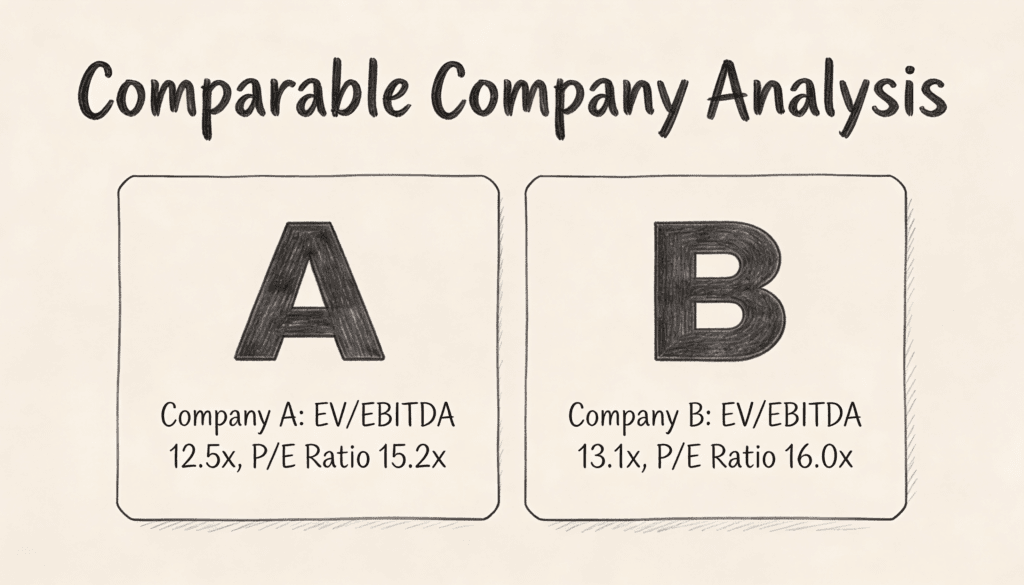
Compare that to the price to earnings ratio, which is the financial world’s favorite party trick. The P/E ratio tells you how much you are paying for each dollar of earnings. But earnings, as we have already established, can be massaged like a tense shoulder.
Free cash flow yield is harder to fake. You either generated the cash or you did not. The bank statement is the bank statement.
The Counterintuitive Part
Here is where things get interesting. High free cash flow yield is not always good, and low free cash flow yield is not always bad.
A company with a screaming twenty percent free cash flow yield might look like a gift from the investing gods. It might also be a melting ice cube. Newspaper companies in the early 2000s had gorgeous free cash flow yields right before the entire industry got eaten alive by the internet. The market was not stupid. It was pricing in the fact that the cash would not be there for much longer.
Meanwhile, a company with a tiny free cash flow yield might be reinvesting every available dollar into growth that will pay off enormously later. Amazon did this for years. People who looked only at the yield missed one of the great wealth creation stories of our lifetime.
The trick is not just to find high yield. It is to find sustainable yield. The cash flow that will still be there in five years, and ten years, and twenty years. That is the difference between a value investor and someone who bought a value trap.
The Buffett Connection
Warren Buffett rarely uses the term free cash flow in his letters. He prefers something he calls owner earnings. Strip away the accounting fiction and figure out what a business actually generates for its owners.
This is not coincidence. Buffett became the most successful investor in history partly because he understood that earnings were a story and cash was reality. He looked at businesses the way a farmer looks at land. Not how it appears in the brochure, but how much it actually produces.
The financial industry, on the other hand, has a strong incentive to keep things complicated. Complexity sells. If everyone realized that you could evaluate a company with one ratio and a calculator, an entire profession would have to find new jobs.
What This Means When You Open Your Brokerage App
Most investors look at a stock and see a price. They might glance at the P/E ratio or the dividend yield. They almost never check the free cash flow yield, which is a shame because it is sitting right there on every financial website in the world.
When you find a company with a stable or growing free cash flow yield significantly higher than what you could earn from a safe bond, you have found something interesting. Not necessarily a buy, because you still need to ask whether that cash flow will continue, but at least worth investigating.
When you find a glamour stock with a free cash flow yield approaching zero or negative, you have found something else. Maybe a future giant in the making. Maybe a company that is one bad quarter away from disaster. Probably you cannot tell the difference without doing actual work.
The point is not that free cash flow yield gives you answers. It is that it asks better questions.
The Boring Truth About Wealth
There is something almost philosophical about all this. The financial world is obsessed with stories, narratives, momentum, themes. The next big thing. The disruptive technology. The visionary founder.
Cash does not care about any of that. Cash either exists or it does not. A business either generates it or it consumes it. Over long periods, the businesses that consistently generate cash tend to make their owners rich. The businesses that consistently consume cash tend to make their owners poor.
This is not glamorous. Nobody writes magazine covers about companies that boringly produce free cash flow year after year. Nobody is making a Netflix series about a paint distributor that returns capital to shareholders. But these are often the businesses that compound quietly for decades while everyone is busy chasing rockets that flame out.
The investor who internalizes this stops getting excited about earnings beats. They stop chasing momentum. They start asking, every time they look at a company, the only question that ever really mattered. How much cash does this thing actually produce, and how much am I being asked to pay for it?
A Final Word of Caution
Free cash flow yield is a tool, not a religion. It will lie to you sometimes. A company might have a temporarily inflated yield because it cut back on necessary investment. Another might have a temporarily depressed yield because it is building something significant.
The numbers do not think for you. They are the starting point, not the ending point.
But if you only had one metric to evaluate a business with, and you had to choose between earnings and free cash flow yield, the choice should be obvious. One can be engineered. The other has to actually exist in a bank account.
In a world full of stories, that is worth quite a lot.