Table of Contents
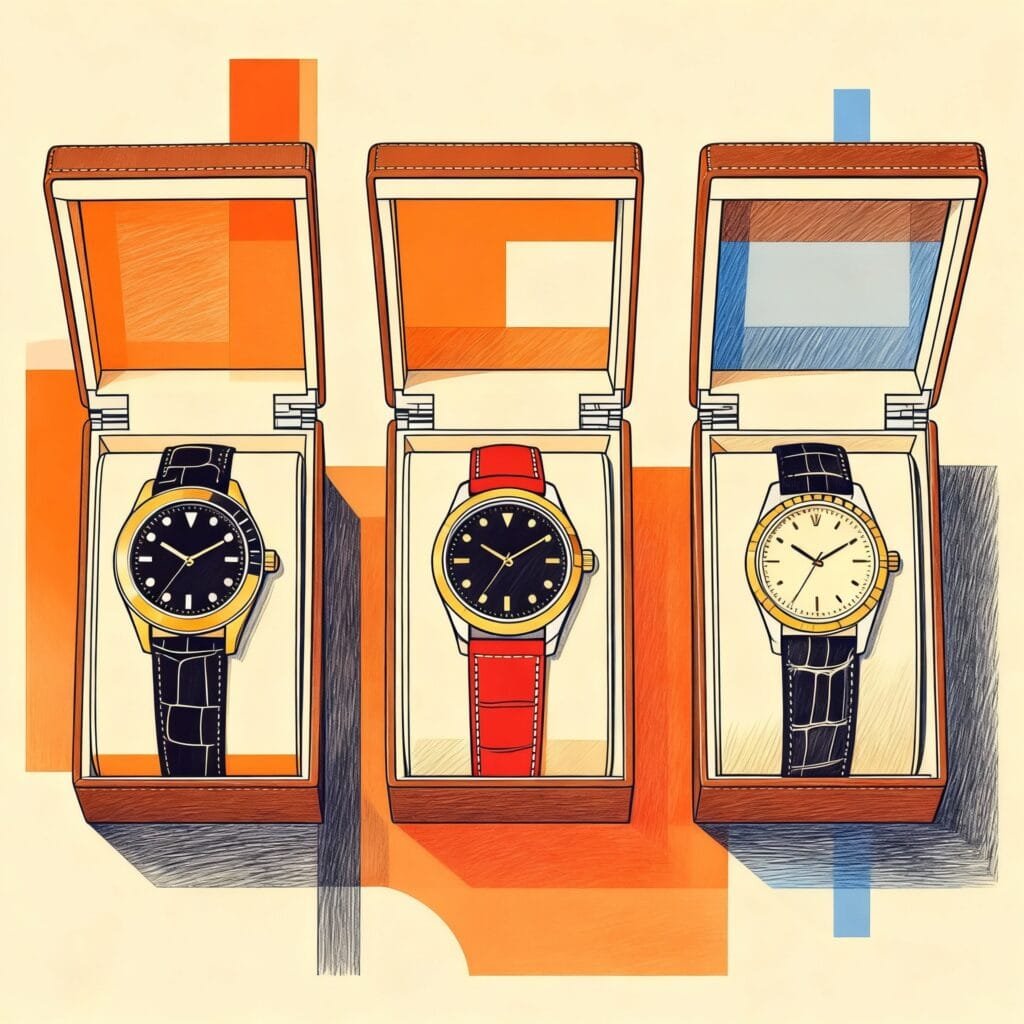
There is a quiet panic happening in the vaults of the very rich, and it does not look like panic at all. It looks like a Basquiat hanging in a Geneva freeport. It looks like a case of 2010 Domaine de la Romanée-Conti resting in a temperature controlled cellar in London. It looks like a steel Patek Philippe Nautilus, untouched, still wrapped in its plastic, sitting in a safe somewhere in Singapore.
To the casual observer, these things appear to be hobbies. Toys. The expensive tastes of people who have already bought every house they could possibly live in. But that reading misses what is actually going on. The wealthy are not collecting these objects because they have run out of things to spend money on. They are collecting them because they have lost faith in money itself.
That is a strange sentence to write in an era when central banks publish glossy reports about price stability and politicians talk about cooling inflation as if it were a fever that broke last week. But the people who have the most to lose tend to read the situation differently than the people writing the press releases. And what they have concluded, more or less in unison, is that cash is no longer a safe place to wait.
The Quiet Insult of Holding Money
There is something almost philosophical about what inflation does to a person. It is not just that your money buys less. It is that your patience gets punished. Every month you hold cash and do nothing with it, you are quietly being told that prudence was the wrong choice. Saving, that old virtue your grandparents preached, has been turned into a slow leak.
For a middle class household, the leak is painful but manageable. You feel it at the grocery store and at the gas pump and you grumble. For someone with serious money, the leak is catastrophic in a way that is hard to imagine until you do the math. A loss of a few percentage points a year on a fortune large enough to matter is not a rounding error. It is a house. It is a small company. And it happens every year, silently, while you sleep.
So the wealthy are doing what wealthy people have always done when the currency starts to feel suspicious. They are converting paper into things. Things that cannot be printed. Things that do not answer to any central bank. Things that, ideally, somebody else will want even more in ten years than they want now.
Why These Three, and Not Something Else
You might reasonably ask why art, wine, and watches in particular. There is gold, after all. There is real estate. There are commodities and stocks and a hundred other ways to park value. What makes these three categories quietly dominate the conversation in private banking offices?
Part of the answer is boring. Art, wine, and watches are portable in ways that buildings are not. A painting can cross a border in a briefcase. A bottle of wine fits in a suitcase. A watch sits on your wrist and walks through customs without anyone blinking. For people who think globally about wealth, and who have always thought globally about wealth, this matters more than the casual observer realizes.
But there is a deeper reason, and it is the reason this whole phenomenon is worth thinking about. These three categories sit at a strange intersection of scarcity, story, and time.
A Rothko cannot be reprinted. A 1982 first growth Bordeaux cannot be re-fermented. A discontinued Audemars Piguet cannot be unmade. And unlike a share of a company, which is essentially a paper claim on a stream of future profits that may or may not arrive, these objects exist in the world. You can touch them. You can show them to your friends. You can pretend, with some justification, that you bought them because you love them
even if your accountant knew exactly what you were doing.
The Status Game in Disguise
Here is where it gets interesting, and where the irony starts to thicken. The reason these objects hold value is not really because they are scarce. Plenty of things are scarce. There is a finite number of empty soda cans from 1973, and nobody is rushing to store them in climate controlled warehouses.
These objects hold value because the right people agree they hold value. That is the entire mechanism. A painting is worth ten million dollars because a small, interconnected, globally distributed community of collectors, museums, dealers, and auction houses has decided it is worth ten million dollars. Take that consensus away, and you have a piece of canvas with some dried paint on it.
In other words, what the wealthy are really stockpiling is not art or wine or watches. They are stockpiling membership in a club. The object is the receipt. The value is the social agreement.
This is not a criticism. It is just the actual structure of the thing. And once you see it, you start to understand why these markets are so resilient even when conventional assets get hammered. The club does not want its own collectibles to lose value, because the club is the one assigning the value. It is one of the few markets in the world where the buyers, the sellers, and the appraisers are essentially the same group of people, passing the hat around the same table.
When you are a member of that table, your assets do not really fluctuate based on macroeconomic conditions in the way a stock portfolio does. They fluctuate based on whether the table still meets, and the table has been meeting for several centuries now.
The Boredom Premium
There is another reason the rich are drawn to these assets, and it is one you will not see in any financial publication. Cash is boring. Bonds are boring. Even stocks, after the tenth time you check your phone in a day, become a kind of glowing wallpaper.
But a wine cellar is a room you can walk into. A watch collection is something you can lay out on velvet and rotate through the week. A painting is something that hangs above your dining table and gets looked at by everyone who visits.
Wealth, once it passes a certain threshold, stops being about acquiring more and starts being about feeling something. The very rich already know that the next zero on the bank balance does not change their life in any meaningful way. What they are buying with these collectibles is not really return. It is texture. It is the experience of stewardship. It is the chance to be a person who knows things about Burgundy, or who can talk about brushwork at a dinner party, or who owns a watch that has a story.
The financial logic is real, but it would not be enough on its own. What sustains these markets is that the assets are also genuinely interesting to own. Try saying that about a Treasury bond.
The Counterintuitive Part
Now for the part that should make you pause. If everyone with serious money is moving into these assets, the obvious conclusion is that you should too. Buy some wine. Get a watch. Find a small painting. Ride the wave.
This is almost certainly the wrong lesson.
The wealthy are not making these moves because the assets are about to appreciate dramatically. They are making them because they already have so much that protection matters more than growth. A billionaire who keeps pace with inflation is winning. A regular saver who keeps pace with inflation is treading water.
There is a quiet trap in copying the moves of the very rich. Their portfolios are built around problems you do not have. They are trying to preserve fortunes across generations, hide value from political instability, and maintain their social position inside the small global tribe that matters to them. These are not your problems. Your problem, if you have a normal amount of money, is growth. And these collectible markets are famously bad at growth for anyone who is not already inside the club.
The art market has spent decades quietly transferring money from outsiders who buy at the top to insiders who sell at the right moment. The wine market has the same dynamic, slightly softened by the fact that you can at least drink your losses.
What This Whole Story is Really Telling You
Strip away the wine cellars and the auction houses and the watch boutiques, and the underlying message is simple. A growing number of people who manage serious wealth have quietly decided that holding cash is no longer the conservative choice. They believe the long arc of currency points downward. They believe the institutions that manage money have problems they cannot fix. They believe the safest thing to own is something that exists outside the system.
You do not have to agree with them to find that interesting. Even if they are wrong, the fact that they have collectively shifted their behavior tells you something about the mood inside the offices where capital actually lives. And mood, in finance, has a way of becoming reality. If enough people decide that paper currency is suspect, paper currency becomes suspect, regardless of what the official numbers say.
What the rest of us do with that information is the actual question. You can ignore it and continue to treat cash as the resting state of wealth, the way most financial advice still tells you to. Or you can take seriously the idea that the people who built their lives on understanding money have noticed something, and start thinking about what your own version of a painting, a bottle, or a watch might look like. Not literally. But in spirit. Something durable. Something nobody can print more of.
There is something almost old fashioned about it. Almost peasant like, in fact. After centuries of building ever more sophisticated financial instruments, the smart money in the world has decided that the most sophisticated move is to go back to basics: art, wine, watches.