Table of Contents
There is a moment, familiar to almost anyone who has ever opened a brokerage app, where a falling stock starts to look like a gift. The price is down 30 percent. Then 40. Your brain starts whispering that this is the opportunity everyone talks about. Buy low, sell high. Simple enough.
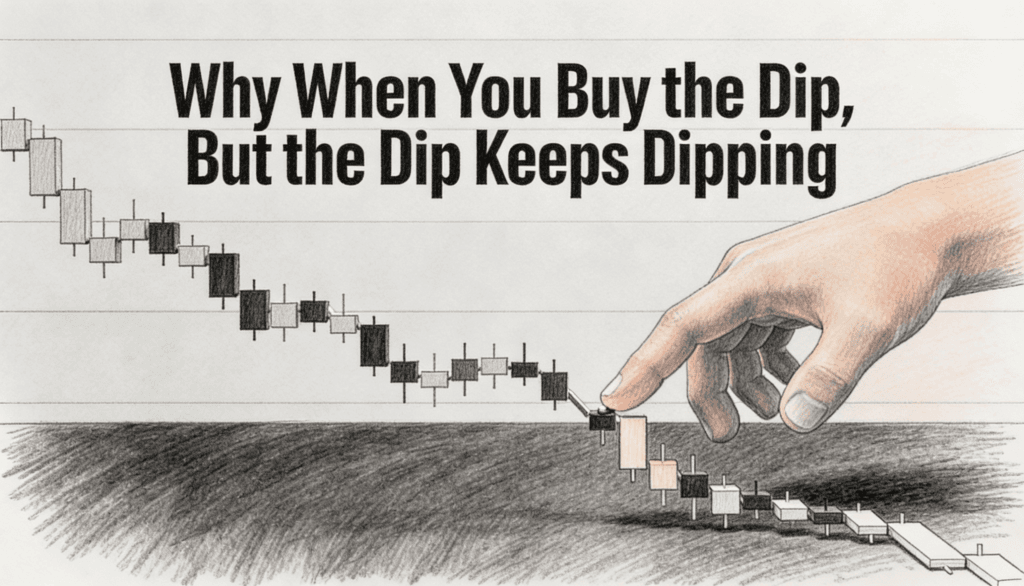
So you buy the dip.
And then the dip dips further.
What felt like catching a falling knife turns out to be catching a falling anvil. The stock drops another 20 percent, trading volume evaporates, and the online community that was screaming about this ticker symbol two weeks ago has gone suspiciously quiet.
You did not buy the dip. You bought the dump.
The Oldest Trick, Wearing New Clothes
Pump and dump schemes are not new. They are not even particularly clever. The basic structure has remained almost unchanged since the 1700s, when stock promoters in London coffeehouses would spread rumors about shipping companies to inflate share prices before selling. The only thing that changes is the medium.
In the 1920s, it was newspaper tipsheets. In the 1990s, it was email spam. In the 2010s, it was penny stock forums. Today it is Discord servers, TikTok videos, and anonymous Twitter accounts with laser eyes and rocket emojis in their bios.
The scheme works like this. A group of insiders quietly accumulates a large position in a low volume asset. They then generate excitement through coordinated promotion. The price rises as outside buyers flood in. The insiders sell their holdings into that buying pressure. The price collapses. The outsiders are left holding an asset that is worth a fraction of what they paid.
It is, at its core, a transfer of wealth from the late to the early. And the genius of it is not in the mechanics. It is in the psychology.
Why Smart People Fall for Obvious Traps
Here is what makes pump and dump schemes genuinely interesting from an intellectual standpoint. They should not work. The pattern is well documented. Regulators warn about it constantly. The signs are almost comically obvious in hindsight. And yet people keep falling for them, including people who are otherwise sharp, skeptical, and financially literate.
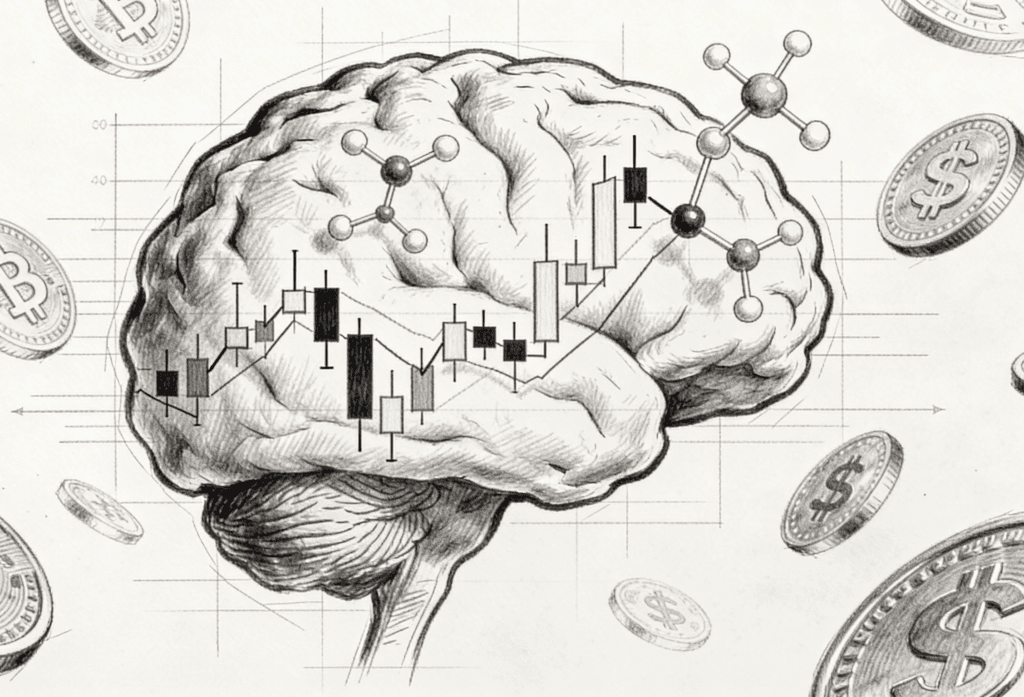
The reason is that pump and dump schemes do not exploit ignorance. They exploit something much more powerful. They exploit the architecture of human decision making itself.
Consider what happens when you see a stock rising 50 percent in a week. Your rational brain knows that parabolic moves in obscure assets are suspicious. But your emotional brain is doing something entirely different. It is calculating regret.
Not the regret of losing money if you buy and it crashes. The regret of missing out if you do not buy and it keeps going up. People will take objectively terrible bets not because they think they will win, but because they cannot stand the thought of watching from the sidelines if the bet pays off.
This is the same psychological mechanism that makes people play the lottery. The expected value is negative. Everyone knows this. But the emotional cost of not playing when your numbers come up feels unbearable. Pump and dump operators understand this intuitively, even if they have never read a paper on behavioral economics.
The Social Proof Machine
There is another layer here that is worth unpacking. Pump and dump schemes are, at their foundation, social proof engines.
Robert Cialdini, the psychologist who literally wrote the book on influence, identified social proof as one of the six primary weapons of persuasion. When we are uncertain about what to do, we look at what other people are doing. The more people doing it, the more correct it feels.
Pump and dump operators manufacture social proof at industrial scale. They create dozens of fake accounts posting about the same stock. They flood forums and comment sections. They produce professional looking videos and write detailed analysis that sounds authoritative. They coordinate their timing so that the target appears to be trending organically.
From the outside, it looks like a groundswell of genuine interest. And because humans are fundamentally social creatures who evolved to follow the crowd as a survival strategy, we instinctively treat widespread enthusiasm as a signal of value.
This is the same mechanism that makes restaurants put people by the window and nightclubs maintain artificial lines outside. The appearance of demand creates real demand. In a pump and dump, the appearance of conviction creates real conviction.
The Dip That Was Never Really a Dip
Now here is where things get philosophically interesting for the person who buys the dip.
When a legitimate stock declines because of temporary bad news or market panic, buying the dip can be a rational strategy. The underlying business still has value. The price has simply disconnected from that value due to emotional selling. Warren Buffett has built his career on this exact principle.
But in a pump and dump, there is no underlying value to revert to. The “dip” you are buying is not a discount. It is the beginning of the price returning to its actual worth, which in many cases is close to zero.
The problem is that from the inside, these two situations look identical in the early stages. A legitimate dip and the first phase of a dump both show a falling price on an asset that recently had strong momentum. The chart patterns can be remarkably similar. The key difference is invisible to technical analysis. It lives in the intention of the people who drove the price up in the first place.
This creates a genuinely difficult epistemological problem. How do you know whether you are buying a real dip or catching someone else’s exit? The honest answer is that sometimes you cannot. And that uncertainty is not a bug in the system. It is the feature that makes pump and dump schemes possible.
Follow the Volume, Not the Narrative
If there is a single practical insight buried in all of this, it is about trading volume.
During the pump phase, volume is high and rising. Lots of people are buying. The narrative is compelling. Everything feels urgent. During the dump phase, you see something telling. The price might stabilize or even bounce temporarily, but the volume starts declining. Fewer people are actually transacting. The early insiders have already sold, and the asset is being passed between progressively less informed buyers.
When someone tells you a stock is on sale because it dropped 40 percent from its highs, the first question should not be about the price. It should be about who is still buying and who has already left the building. A falling price with falling volume is not a dip. It is a slow funeral.
This is counterintuitive because we are trained to think of falling prices as opportunities. In a healthy market, they often are. But in a manipulated market, a falling price is the manipulation working exactly as intended.
The Cult Dynamics Nobody Talks About
There is a parallel between pump and dump communities and actual cults that does not get enough attention.
Both operate through a combination of insider language, shared identity, persecution narratives, and escalating commitment. The crypto and meme stock worlds are full of terms like “diamond hands” and “paper hands,” which function exactly like initiation language in high demand groups. They create an in group and an out group. They make selling feel like a moral failure rather than a financial decision.
This is extraordinarily effective because it transforms an investment position into an identity. Once you are not just someone who holds a stock but a proud member of a community that holds this stock, selling becomes psychologically equivalent to betraying your tribe. And humans will endure staggering losses before they betray their tribe.
The people running pump and dump schemes benefit enormously from this dynamic. The more their targets identify with the holding, the longer those targets will hold through the decline, giving the insiders more time and more liquidity to exit.
The Information Asymmetry You Cannot Fix
At the deepest level, pump and dump schemes work because of a fundamental asymmetry that no amount of regulation can entirely eliminate.
The people running the scheme know it is a scheme. The people buying in do not. This sounds obvious, but the implications are profound. It means that in any interaction between the promoter and the buyer, the promoter has a structural advantage that cannot be overcome through research, intelligence, or diligence.
You can study the chart. You can read the filings. You can analyze the fundamentals. But if the entire price movement was artificially generated, all of that analysis is built on a foundation of deliberate deception. You are bringing a spreadsheet to a magic show.
This is why the standard advice to “do your own research” is necessary but not sufficient. Research helps when the underlying data is real. When the data itself has been manufactured, research can actually make you more confident in a bad position, not less.
What Actually Protects You
The uncomfortable truth is that the best defense against pump and dump schemes is not analytical. It is temperamental.
It is the willingness to miss out. The ability to watch something go up 500 percent and feel nothing. The discipline to recognize that the fear of missing an opportunity is itself being weaponized against you.
This is genuinely difficult because it runs against every instinct that makes us human. We are wired to chase momentum, to follow the group, to act when we sense urgency. These instincts served us well on the savannah. They serve us terribly in financial markets that have been deliberately engineered to exploit them.
The investor who avoids pump and dump schemes is not the one with the best technical analysis or the most Discord channels. It is the one who has made peace with the possibility of being wrong about sitting out. The one who understands that the cost of missing a real opportunity is almost always lower than the cost of buying into a fake one.
The Dip Has a Message
When you buy the dip and the dip keeps dipping, the market is telling you something. It is telling you that the price was never based on anything that could sustain it.
The hardest part is not recognizing a pump and dump after the fact. Hindsight makes everything obvious. The hard part is recognizing it in the moment, when the excitement is real, the gains are visible, and the community is telling you that this time is different.
It is never different. The medium changes. The asset class changes. The memes change. But the structure is always the same. Someone creates artificial demand. Someone else mistakes that demand for value. And wealth moves from the second group to the first.
The only variable is whether you are early enough to be in the first group or honest enough to admit you are probably in the second.