Table of Contents
There is a peculiar kind of investor who sleeps soundly for years and then, on a single afternoon, loses everything. He is not reckless. He is not stupid. He has done the math, hedged where possible, and read the central bank statements with the seriousness of a monk reading scripture. And yet, when the wind changes direction, he is found face down in the river, his portfolio drifting downstream like an empty canoe.
This is the carry trader. And the lesson he teaches, often posthumously to his career, is one that finance rarely admits out loud. Most strategies in markets are judged by their outputs. The carry trade can only be understood by its inputs.
The Quiet Engine
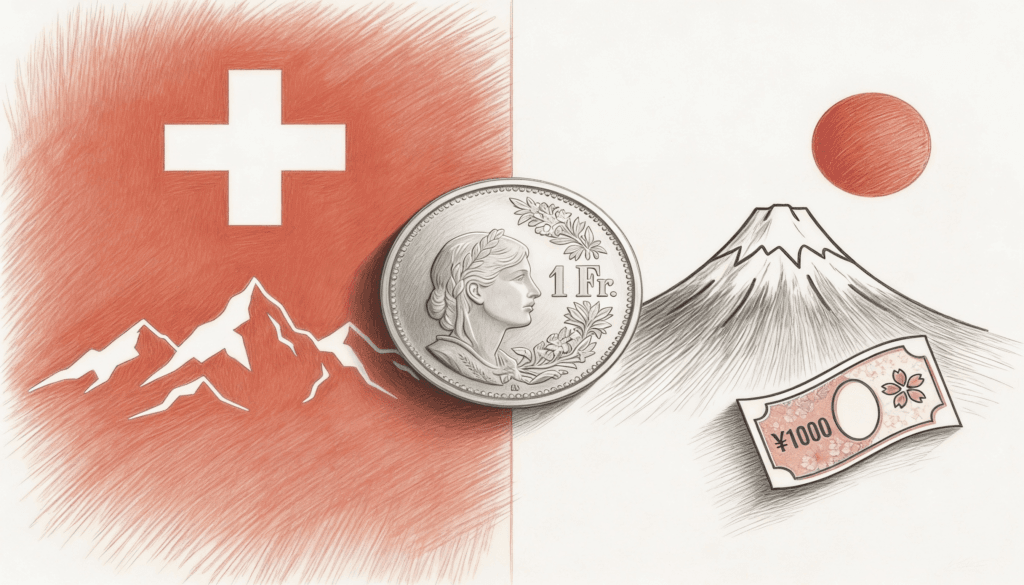
Let us begin with the mechanism, stripped of mystique. A carry trade is the act of borrowing something cheap and parking the proceeds in something expensive. The Japanese yen has long been the world’s favorite thing to borrow, paying interest rates so low that holding it feels like a charitable donation. The proceeds go anywhere yields are higher. Brazilian bonds. Turkish deposits. Mexican peso assets. Australian dollars in a friendlier decade. The trader pockets the difference, which arrives quietly, daily, like rent from a tenant who never complains.
It is the most boring transaction in finance. It is also one of the most popular. Trillions of dollars flow through this corridor at any given moment, and the entire enterprise rests on a single, fragile assumption. That nothing will change quickly.
Notice what is missing from this description. There is no thesis about a company. No view on a product. No insight into a technology or a demographic shift. The carry trader is not predicting anything. He is collecting. He is, in the most literal sense, getting paid to stand still.
This is the first clue that the carry trade is not really a strategy in the conventional sense. It is closer to a lifestyle. And lifestyles, as anyone who has tried to change one knows, are defined not by what they produce but by what they require.
The Tyranny of Conditions
Most investors think in terms of outputs. Will this stock go up? Will this earnings report beat expectations? Will this sector outperform that one? The mental architecture is forward looking and target oriented. You are aiming at something.
The carry trade flips this entirely. The carry trader does not aim. He waits. His profit does not come from a future event but from the absence of one. He needs interest rate differentials to persist. He needs currencies to behave. He needs central banks to telegraph their moves with the courtesy of a polite dinner guest. He needs volatility to remain on holiday.
In other words, the carry trader is not betting on what will happen. He is betting on what will not happen. And that is a very different kind of bet, governed by a very different kind of logic.
Think of it this way. If you build a house in a desert, you are not predicting that it will be sunny tomorrow. You are assuming the climate itself. Your strategy is the climate. The day the rain comes is the day your strategy dies, and no amount of cleverness inside the house will save you. The roof was never built for water.
This is what it means to say the carry trade is a strategy of inputs, not outputs. The trader is not optimizing for a return. He is harvesting a condition. And the condition, by its very nature, is something he does not control and often does not even fully understand.
The Illusion of Skill
Here is where the carry trade becomes philosophically interesting, and where it humbles its practitioners more than they would like to admit. Because the strategy works most of the time, the people who run it tend to believe they are skilled. The returns are smooth. The Sharpe ratios glitter. The pitch decks practically write themselves.
But what is being measured during the good years is not skill. It is the absence of disruption. The carry trader who made twenty two percent annually for seven years did not outsmart anyone. He simply happened to be standing in a quiet field. The field was quiet because of decisions made in Tokyo, Washington, Frankfurt, and a few other capitals where the trader has no vote and often no insight.
When the field stops being quiet, the carry trade loses years of gains in days. This is not a flaw in execution. It is the entire point of the structure. The strategy is designed to absorb small steady gains and pay them all back, with interest, the moment conditions shift. It is the financial equivalent of selling earthquake insurance in a region that is overdue for one. The premiums feel like income until they are revealed to be a liability you forgot you had written.
The unflattering truth is that distinguishing a great carry trader from a mediocre one during good times is nearly impossible. They look identical. Their differences only emerge in the crisis, and even then, the difference is often just who was lucky enough to be smaller when the bill arrived.
What Skill Actually Looks Like
This is not to say no skill exists. It does, but it is not where most people look for it. Skill in the carry trade is not about picking the right pair of currencies or finding the cleverest yield. Those are commodity decisions, available to anyone with a Bloomberg terminal and a pulse.
Real skill lies in something far less glamorous. It lies in reading the inputs. In sensing when the climate is changing before the rain arrives. In recognizing that the same trade that printed money for five years has now become structurally different, even though it looks the same on the screen.
Consider what happened in July of 2024, when a sudden shift in the Japanese yen against the dollar wiped out positions that had taken years to build. The mechanics had not changed. The interest rate differential was still there. The borrowing was still cheap. But the inputs, the conditions underneath the trade, had quietly rearranged themselves. The Bank of Japan had hinted at tightening. American data had softened. Positioning had grown crowded. None of this was hidden. It was sitting in plain sight for anyone who was looking at the inputs rather than the outputs.
But most carry traders were looking at the outputs. The line on their P&L was still going up and to the right. The rent from the tenant was still arriving. By the time they looked at the inputs, the inputs had already left the building.
The Deeper Lesson
There is something almost spiritual about the discipline required to think this way. We are conditioned, in markets and in life, to focus on results. The score. The return. The outcome. We grade ourselves and others on what we produce, not on what we depend upon.
But the carry trade, in its quiet and devastating way, reminds us that most of what we produce in finance is downstream of conditions we did not create. The fund manager who looked brilliant in a falling rate environment was not necessarily brilliant. He was correctly positioned for an input he did not choose. The startup investor who looked visionary during a decade of free money was not always visionary. He was operating in a climate that rewarded his particular allergy to discipline.
This is uncomfortable because it suggests that a great deal of what we call investment skill is actually environmental skill. It is the ability to recognize what the world is currently giving away for free and to pick it up before someone else does. That is not nothing. But it is a different thing than what most investors think they are doing.
The carry trader is the purest expression of this dynamic. He is not pretending to predict anything. He is simply picking up the money the world is leaving on the table, and hoping the world does not change its mind. When the world changes its mind, which it always eventually does, he learns the difference between rent and a windfall. The first is what you collect when conditions are stable. The second is what you must pay back when they are not.
There is a contrarian thought hidden here that deserves to be said plainly. The best carry traders are often the ones least excited about carry. They treat the trade not as a source of return but as a source of information. The carry tells them what the world currently believes about risk. When the trade is too easy, when too many people are doing it, when the returns are too smooth, they get nervous. Not because they think they can time the unwinding, but because they know that the inputs are deteriorating even when the outputs are still smiling.
This inversion of attention, from output to input, is one of the rarest skills in finance. Most participants spend their careers staring at their P&L and adjusting their actions based on what they see. The carry trader who survives spends his career staring at the conditions and adjusting his exposure based on what he senses. The first method gives you immediate feedback. The second gives you longevity. Markets do not pay you for what is easy to do. They pay you for what is easy to forget to do.
A Final Thought
The carry trade is often dismissed as a naive pursuit. Borrow cheap, lend dear, pocket the spread. A child could understand the mechanics. But the discipline required to do it well, and the wisdom required to do it without eventually being destroyed by it, is among the most demanding in markets.
It demands that you accept your dependence on conditions you did not create. It demands that you measure your strategy by its inputs rather than its outputs, even though the outputs are what get measured by everyone else. It demands that you remain alert during years of quiet, when alertness has no obvious reward, and that you have the humility to step back when everything is finally going well.
Most people cannot do this. The temptation to celebrate the rent, to call yourself a landlord, to mistake the season for the climate, is too strong. And so the carry trade keeps doing what it has always done. It quietly enriches the patient, and it loudly humiliates the proud, and the only difference between them is which set of variables they chose to watch.
The world rewards inputs eventually, but it pays in outputs first. That is the trick that catches almost everyone.