Behavioral Finance

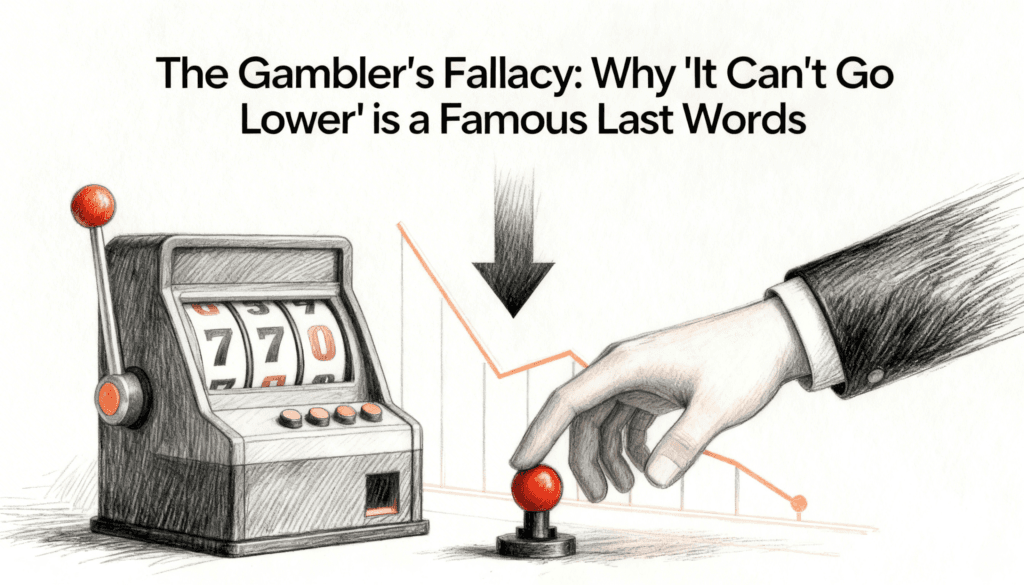
The Gambler's Fallacy- Why It Can't Go Lower is a Famous Last Words

The Gambler’s Fallacy: Why “It Can’t Go Lower” is a Famous Last Words

There is a particular kind of confidence that only shows up when someone is losing. You will not find it in the early stages of a trade gone wrong, when the loss is small and the ego still intact. It arrives later, after the position has bled for weeks, after the chart has become something […]

The Gambler’s Fallacy: Why “It Can’t Go Lower” is a Famous Last Words Read More »

Stop Lying to Yourself- You Are Not Buying the Dip, You Are Catching Knives

Stop Lying to Yourself: You Are Not “Buying the Dip,” You Are Catching Knives

There is a phrase that floats around investing circles with the confidence of a man who has read exactly one book about Warren Buffett. “I am buying the dip.” People say it like a mantra. They say it in group chats, on social media, at dinner parties where nobody asked. They say it while their

Stop Lying to Yourself: You Are Not “Buying the Dip,” You Are Catching Knives Read More »

Recency Bias in Investing- Why Your Brain Keeps Confusing the Last 12 Months for the Next 30 Years

Recency Bias in Investing: Why Your Brain Keeps Confusing the Last 12 Months for the Next 30 Years

Why Recency Bias Tricks Your Brain Into Confusing the Last 12 Months for the Next 30 Years There is a particular kind of confidence that comes from looking at a chart that only goes back one year. It feels like knowledge. It looks like research. In reality, it is a very expensive form of nostalgia

Recency Bias in Investing: Why Your Brain Keeps Confusing the Last 12 Months for the Next 30 Years Read More »

The Cramer Effect- Measuring the Alpha of Doing the Exact Opposite

The “Cramer” Effect: Measuring the Alpha of Doing the Exact Opposite

There is a strange corner of financial culture where one man’s stock picks have become a reliable compass, but only if you read the compass backwards. Jim Cramer, the host of CNBC’s Mad Money, has spent decades telling millions of viewers what to buy and what to sell. And for almost as long, a growing

The “Cramer” Effect: Measuring the Alpha of Doing the Exact Opposite Read More »

Researching Until it Hurts- The Masochism of Confirmation Bias

Researching Until it Hurts: The Masochism of Confirmation Bias

There is a particular kind of pain that only dedicated investors know. It is the dull ache of spending four hours reading everything you can find about a stock you already bought, not to challenge your thesis, but to feel better about it. You are not researching. You are building a shrine. And every bullish

Researching Until it Hurts: The Masochism of Confirmation Bias Read More »

Profiting from Pessimism- The Math of Buying When Everyone Is Complaining

Profiting from Pessimism: The Math of Buying When Everyone Is Complaining

The Strange Economy of Bad Moods There is a peculiar industry that most investors never think about. It does not manufacture anything. It does not ship products or file patents. But it moves trillions of dollars every year. That industry is collective emotion. When people talk about “the market,” they often speak as if it

Profiting from Pessimism: The Math of Buying When Everyone Is Complaining Read More »

Dopamine vs. Dividends- The Neurological Reason You Can't Stop Day Trading

Dopamine vs. Dividends: The Neurological Reason You Can’t Stop Day Trading

Your brain doesn’t care about your retirement account. It cares about what happened in the last three seconds. This fundamental mismatch explains why millions of rational, educated people with good jobs and solid futures find themselves refreshing their trading apps at 2 AM, watching a stock that represents 0.3% of their portfolio move by pennies.

Dopamine vs. Dividends: The Neurological Reason You Can’t Stop Day Trading Read More »

The IKEA Effect in Investing- Why You Love Your Bad Stocks Too Much

The IKEA Effect in Investing: Why You Love Your Bad Stocks Too Much

You assemble a bookshelf at two in the morning. Your fingers ache. The instructions make no sense. Three screws are missing, and you’re pretty sure Panel F is actually Panel G. Four hours later, you step back and admire your crooked masterpiece. It’s beautiful. It’s perfect. You built this. A week later, your friend points

The IKEA Effect in Investing: Why You Love Your Bad Stocks Too Much Read More »

The Dunning-Kruger Investment Portfolio- Why You Think You're a Pro After One Green Week

The Dunning-Kruger Investing Portfolio: Why You Think You’re a Pro After One Green Week

There’s a peculiar moment in every new investor’s journey when the market whispers sweet lies directly into their ear. It usually happens after a few successful trades, maybe a week or two of watching numbers tick upward. Suddenly, Warren Buffett seems like he’s been doing things the hard way. The investing books collecting dust on

The Dunning-Kruger Investing Portfolio: Why You Think You’re a Pro After One Green Week Read More »