Global & Macro

How the Napoleonic Wars Accidentally Invented Modern Diversification

How the Napoleonic Wars Accidentally Invented Modern Diversification

Napoleon Bonaparte wanted to conquer Europe. What he actually conquered, without meaning to, was the way money works. The man who nearly unified a continent by force ended up unifying something far more lasting: the logic behind how investors spread their bets. This is not a story about Napoleon the general. It is a story

How the Napoleonic Wars Accidentally Invented Modern Diversification Read More »

Strategic Ambiguity- Why Central Banks Never Say Exactly What They Mean

Strategic Ambiguity: Why Central Banks Never Say Exactly What They Mean

There is a strange ritual that happens several times a year. The chair of the Federal Reserve walks to a podium, reads a carefully prepared statement, and manages to talk for thirty minutes without saying anything concrete. Reporters then spend the next 48 hours arguing about what was actually said. Markets move billions of dollars

Strategic Ambiguity: Why Central Banks Never Say Exactly What They Mean Read More »

The Alternate History- What if Japan Never Signed the Plaza Accord?

The Alternate History: What if Japan Never Signed the Plaza Accord?

In September 1985, finance ministers from five of the world’s largest economies gathered at the Plaza Hotel in New York City. The carpets were expensive. The chandeliers were ridiculous. And the agreement they signed would quietly detonate one of the most spectacular economic bubbles in modern history. The Plaza Accord was, on paper, a gentlemanly

The Alternate History: What if Japan Never Signed the Plaza Accord? Read More »

Why European Stocks Look Cheap (But Are Not)

Why European Stocks Look “Cheap” (But Are Not)

There is a seductive simplicity to the phrase “European stocks are cheap.” It shows up outlook, every quarterly letter from asset managers trying to sound contrarian, and every financial headline that needs a hook. The pitch goes something like this: European equities trade at a discount to their American counterparts, therefore they represent value, therefore

Why European Stocks Look “Cheap” (But Are Not) Read More »

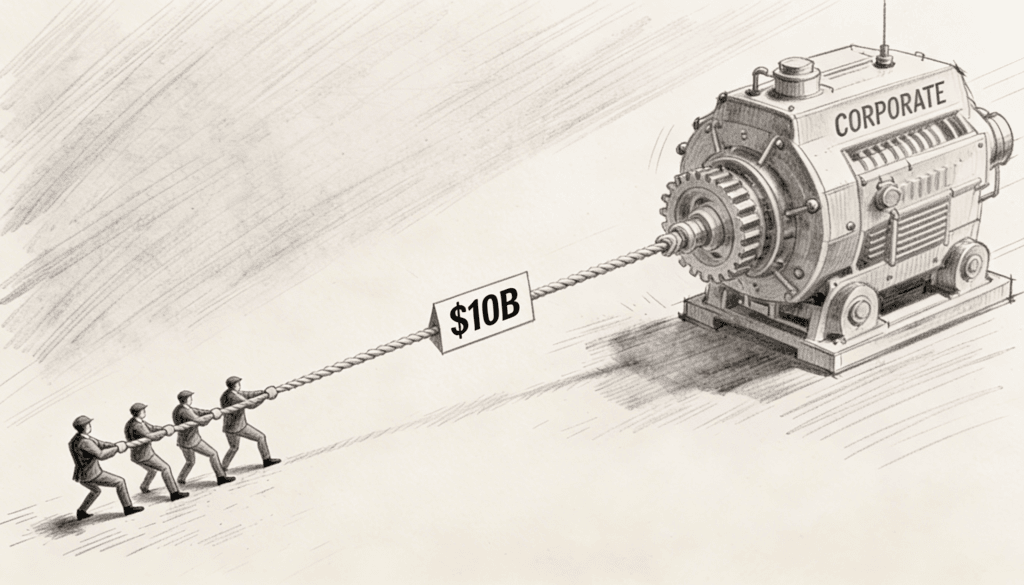
The Physics of Finance- Why Doubling a $10B Market Cap is 10x Harder Than a $1B

The Physics of Finance: Why Doubling a $10B Market Cap is 10x Harder Than a $1B

Most investors treat market capitalization like a number on a scoreboard. A company worth ten billion dollars is simply ten times bigger than one worth a billion. This arithmetic thinking makes intuitive sense until you actually try to double these companies and discover that the laws of finance behave more like the laws of physics

The Physics of Finance: Why Doubling a $10B Market Cap is 10x Harder Than a $1B Read More »

Why a Strong Economy Can Actually Be Bad News for Your Portfolio

Why a “Strong Economy” Can Actually Be Bad News for Your Portfolio

Everyone loves good economic news. Rising GDP, falling unemployment, consumer spending through the roof. Politicians celebrate it, financial commentators cheer it, and your neighbor won’t stop talking about how great business is at his company. The economy is humming, and naturally, your portfolio should be soaring too. Except it doesn’t work that way. Here’s the

Why a “Strong Economy” Can Actually Be Bad News for Your Portfolio Read More »

Safe Haven vs Funding Currency: Why the Swiss Franc Is Both and Why That Changes Everything

Safe Haven vs Funding Currency: Why the Swiss Franc Is Both and Why That Changes Everything

The Currency That Refuses to Be Categorized The Swiss franc breaks the rules that govern every other major currency. It functions as a funding currency for carry trades, yet it also serves as one of the world’s premier safe haven currencies, and these two roles should logically cancel each other out. A funding currency is

Safe Haven vs Funding Currency: Why the Swiss Franc Is Both and Why That Changes Everything Read More »